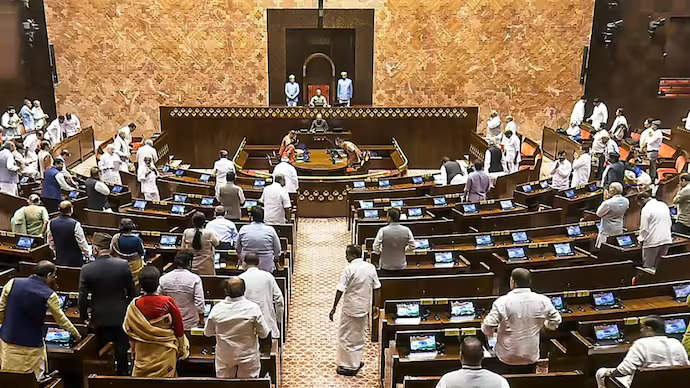
New Delhi: The Union government has introduced the Central Armed Police Forces (General Administration) Bill, 2026 in the Rajya Sabha, proposing a comprehensive statutory framework to regulate the functioning of India’s five Central Armed Police Forces: the CRPF, BSF, CISF, ITBP and SSB.
Presented by Minister of State for Home Affairs Nityanand Rai on Wednesday, the legislation seeks to replace the current patchwork of executive instructions with a single law governing recruitment, promotions, service conditions, cadre management and grievance redressal for thCAPFe more than 10 lakh personnel serving in these forces.
According to the government, the proposed framework aims to introduce greater transparency and predictability in service matters. It provides for structured tenures, clearer promotion pathways, welfare measures and institutionalised mechanisms for resolving grievances. The Bill also proposes cadre restructuring and the creation of additional senior positions to help accelerate promotions for nearly 13,000 officers within the CAPF hierarchy.
However, the most debated provision relates to the role of Indian Police Service (IPS) officers in the leadership structure of the forces. The Bill formally reserves 50 per cent of Inspector General (IG) posts, at least 67 per cent of Additional Director General (ADG) posts, and all Special DG and Director General positions for IPS officers on deputation. Importantly, these provisions would take precedence over any conflicting legal interpretations or judicial orders.
This clause has drawn attention because it effectively departs from a May 2025 judgment of the Supreme Court, which recognised CAPF officers as part of an Organised Group A Service and had suggested a phased reduction of IPS deputation up to the IG level to address concerns over stagnation within the forces.
The government, however, maintains that deputation of IPS officers is essential for maintaining operational coordination between the Centre and states, particularly during internal security operations such as counter-insurgency, elections and disaster response.
The proposal has nevertheless triggered a strong reaction among sections of serving and retired CAPF officers. Many argue that reserving senior leadership posts for IPS officers limits career progression for officers who have spent decades within the forces. Promotion timelines, they point out, can stretch to 15–18 years for initial elevations, despite significant operational responsibilities in high-risk environments.
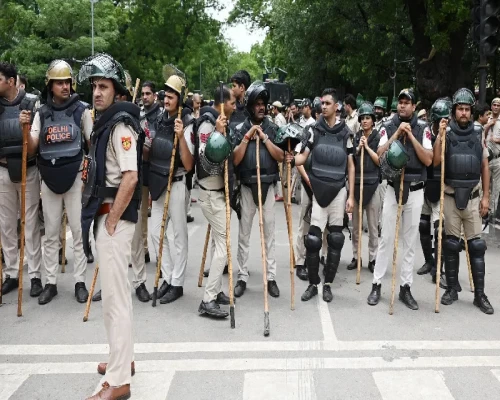
Veterans and serving personnel have organised demonstrations at Jantar Mantar, describing the Bill as discriminatory and arguing that it dilutes the leadership opportunities envisioned in the Supreme Court’s earlier ruling. Some opposition parties have also raised procedural concerns and demanded that the Bill be referred to a parliamentary committee for wider scrutiny.
Supporters of the proposed law contend that a unified administrative framework will bring long-needed clarity to the management of the CAPFs and strengthen national security coordination. Critics, however, believe the move could slow the emergence of an independent leadership pipeline within the forces themselves.
With the Bill now set for parliamentary debate, the legislation has once again brought into focus a long-standing institutional question: how to balance operational experience within the CAPFs with the broader administrative role traditionally played by IPS officers in India’s internal security architecture.
BI Bureau
_270_x_189.webp)