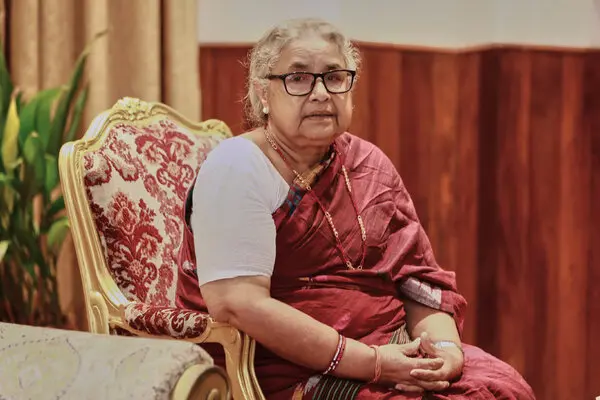
New Delhi: Kathmandu is witnessing a dramatic turn in its political landscape as Sushila Karki, 73, was sworn in on Thursday night as Nepal’s interim prime minister. Karki, best known for being Nepal’s first woman chief justice, has no political background. Her selection follows days of violent protests that forced the resignation of KP Sharma Oli.
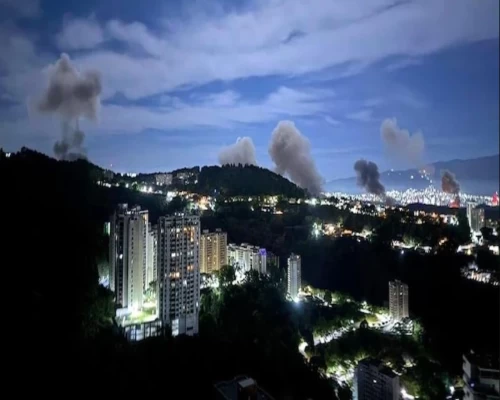
According to sources, the consensus was reached between President Ramchandra Paudel, leaders of the Generation Z protest movement, and Nepal Army chief Ashok Raj Sigdel. The deal came after demonstrations against corruption and misrule swept the country. At least 51 people were killed and over 1,300 injured after police opened fire on protesters. The clashes included the deaths of 21 protesters, nine prisoners, three police officers, and 18 others. Shops have reopened in parts of Kathmandu, and the army has begun pulling back from the streets. Police, now armed with batons instead of rifles, remain stationed at key intersections.
Karki’s appointment has already drawn comparisons with Nobel laureate Muhammad Yunus, who was brought in to lead Bangladesh’s interim government last year after a student-led uprising toppled Sheikh Hasina. Her public reputation was shaped during her tenure as chief justice between July 2016 and June 2017. She was widely regarded for her stance of zero tolerance against corruption. Her rulings included the conviction of Information and Communications Minister Jaya Prakash Prasad Gupta in a corruption case.
Her career was not free of controversy. In 2017, lawmakers from the then ruling Nepali Congress and CPN (Maoist Centre) moved to impeach her, accusing her of bias in a ruling that disqualified the head of Nepal’s anti-corruption watchdog. She was immediately suspended, but the move backfired as protests erupted. Nepal’s Supreme Court intervened and halted proceedings. Within weeks, the impeachment motion was withdrawn, and Karki returned to office before retiring a month later.
Born in 1952 into a farming family in eastern Nepal, Karki was the eldest of seven children. Her family maintained close ties with Bishweshwar Prasad Koirala, Nepal’s first elected prime minister. She completed her Bachelor of Arts degree at Mahendra Morang Campus in 1972, followed by a master’s in political science from Banaras Hindu University in 1975. In 1978, she earned her law degree from Tribhuvan University in Kathmandu. She briefly worked as an assistant teacher at Mahendra Multiple Campus in Dharan in 1985 while building her legal career in Biratnagar. Her judicial journey began in 2009 when she was appointed a temporary judge at Nepal’s Supreme Court. A year later, she became a permanent judge and by 2016 was appointed chief justice.
Her India connection comes through her time as a student at Banaras Hindu University, where she met Durga Prasad Subedi, who would later become her husband. Subedi was a youth leader in the Nepali Congress and took part in one of the most dramatic episodes in the party’s history: the 1973 hijacking of a Nepal Airlines flight. On June 10, 1973, a plane carrying nearly 4 million Nepalese rupees, about $400,000 at the time, was forced to land in Forbesganj in Bihar’s Purnea district. Among the passengers was Hindi film actor Mala Sinha. The hijackers showed a pistol to the pilot and demanded diversion to India. No passengers were harmed. Three boxes of cash were offloaded and later handed to Girija Prasad Koirala on the Indian side. Reports suggest the money was used to fund the armed struggle against Nepal’s monarchy. Subedi and others were arrested by Indian authorities within a year and jailed for two years before returning to Nepal ahead of the 1980 referendum.
The protests that propelled Karki to power began after the Oli government imposed a nationwide ban on social media, widely seen as an attempt to silence dissent. The ban was revoked, but by then the unrest had spiraled. Demonstrators called for Karki, viewed as an incorruptible figure, to lead the interim government. Her rise from the courtroom to the highest political office now places her at the center of Nepal’s uncertain transition.
BI Bureau