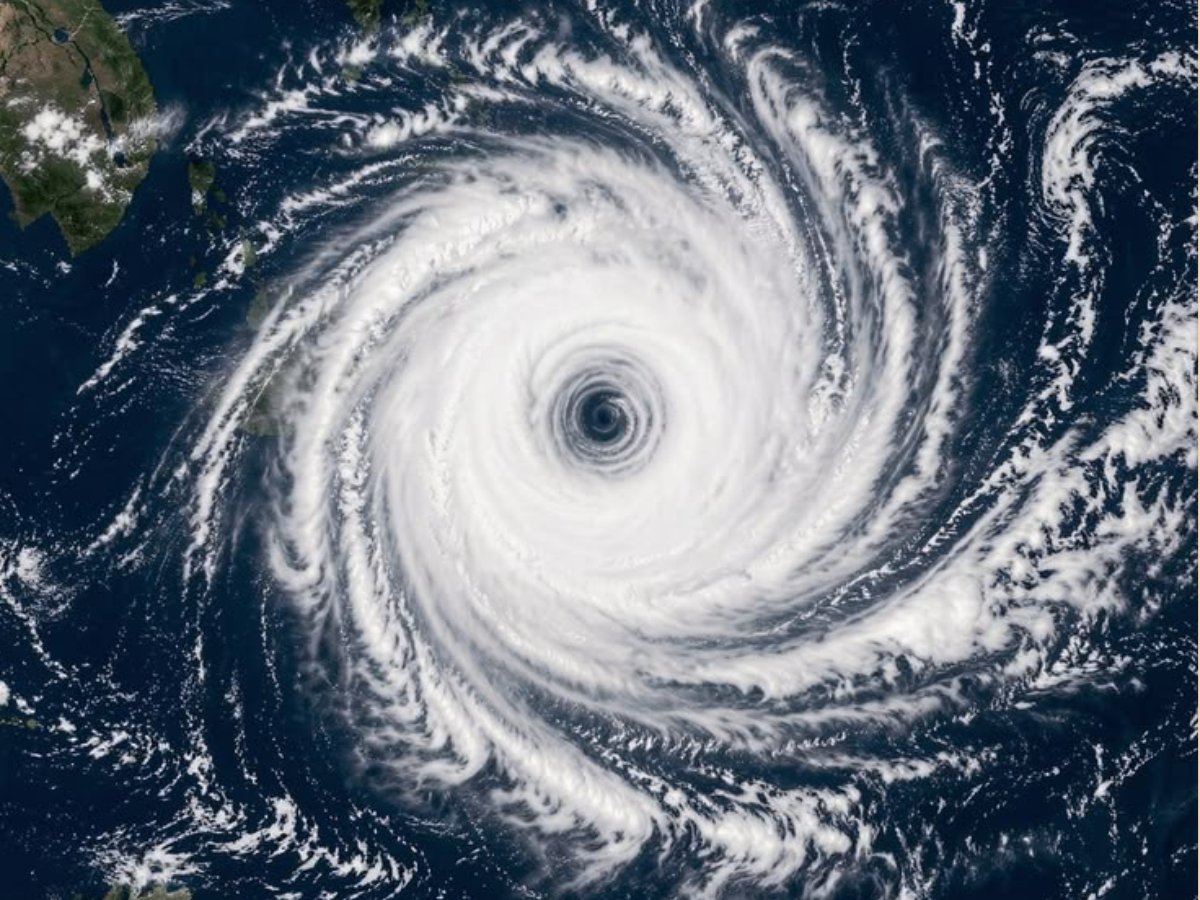
Bhubaneswar: Unverified cyclone forecasts circulating online could trigger panic buying, force farmers to harvest standing crops prematurely and disrupt disaster preparedness, the Odisha government has warned, issuing an official advisory against the dissemination of false, misleading and speculative weather predictions through media and digital platforms.
In an advisory dated October 26, 2026, the Office of the Special Relief Commissioner (SRC), Odisha, expressed concern over individuals and self-proclaimed weather experts sharing speculative cyclone tracks, landfall locations, timelines and impact assessments without adequate scientific validation or reference to official forecasts issued by the India Meteorological Department (IMD).
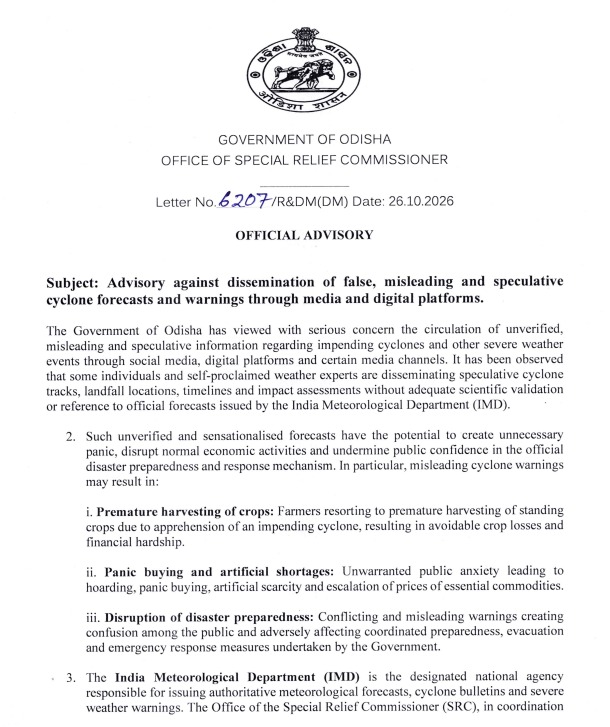
The government said such unverified and sensationalised predictions could undermine public confidence in official disaster management systems and interfere with preparedness, evacuation and emergency response measures.
The advisory identifies three major risks associated with misleading cyclone warnings: premature harvesting of standing crops by farmers fearing an impending cyclone, panic buying and artificial shortages of essential commodities, and confusion among the public over official preparedness and evacuation instructions.
The IMD is the designated national agency responsible for issuing authoritative meteorological forecasts, cyclone bulletins and severe weather warnings. The SRC, in coordination with the IMD and other competent authorities, disseminates official disaster-related advisories and coordinates preparedness, evacuation and response measures across the state.
The government has urged citizens to rely on official weather bulletins and advisories issued by the IMD, the SRC, district administrations and other competent authorities. Unverified messages, cyclone tracks and alarming predictions circulating on social media should not be forwarded without verification.
Media organisations have also been advised to exercise due diligence while reporting cyclone-related developments, attribute forecasts to authoritative sources and refrain from presenting speculative predictions as confirmed warnings. Discussions involving weather analysts should not create confusion about official forecasts or emergency instructions.
The advisory specifically cautions social media users and content creators operating YouTube channels, Facebook pages, WhatsApp groups and other digital platforms against circulating false, misleading or scientifically unsubstantiated predictions that could create public panic.
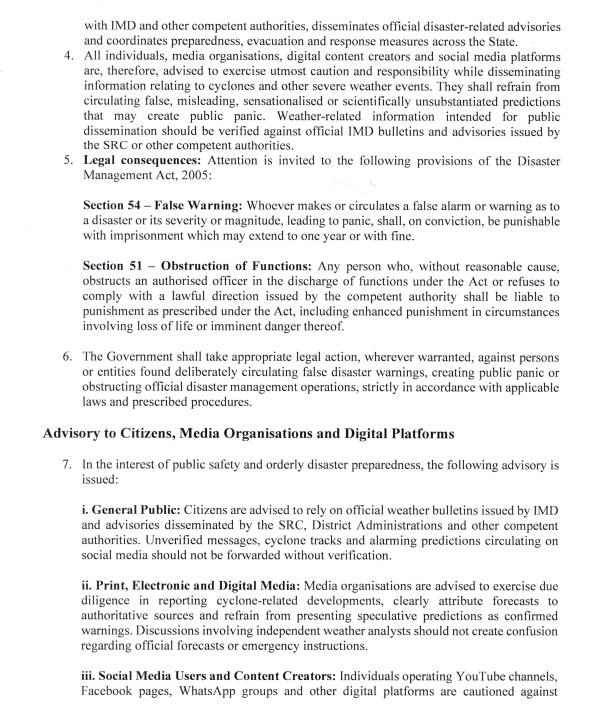
The government has also drawn attention to the legal consequences of spreading false disaster warnings and obstructing official disaster management operations.
Under Section 54 of the Disaster Management Act, 2005, making or circulating a false alarm or warning about a disaster or its severity or magnitude, leading to panic, is punishable with imprisonment of up to one year or a fine. Section 51 provides for punishment for obstructing an authorised officer in the discharge of functions under the Act or refusing to comply with a lawful direction issued by the competent authority.
The advisory states that the government will take appropriate legal action, wherever warranted, against individuals or entities found deliberately circulating false disaster warnings, creating public panic or obstructing official disaster management operations, in accordance with applicable laws and prescribed procedures.
The warning places the focus on responsible communication during severe weather events, when unverified claims can influence public decisions on farming, essential supplies and evacuation. The government has called for information on cyclones and other severe weather events to be verified against official IMD bulletins and advisories issued by the SRC or other competent authorities.
BI Bureau