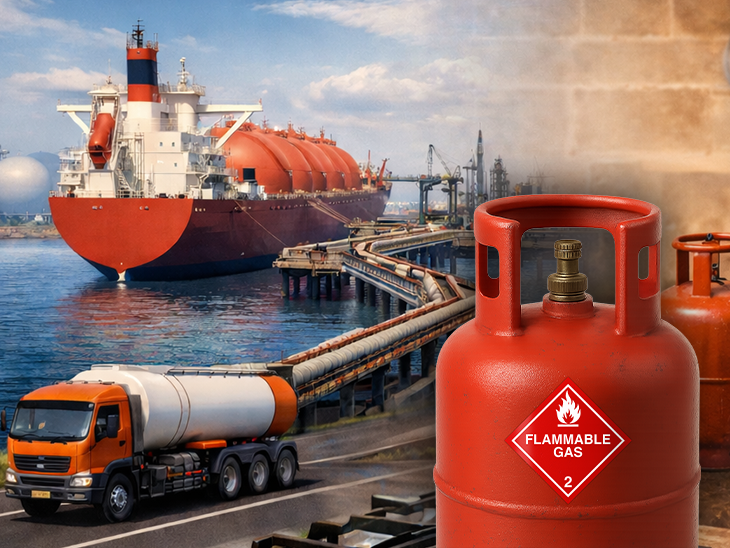
New Delhi: A sharp disruption in liquefied petroleum gas (LPG) supplies triggered by the escalating West Asian conflict has begun rippling across India’s energy ecosystem, hitting restaurants, small industries and food processing units while raising fresh concerns about the country’s dependence on imports for cooking gas.
The crisis has been triggered by disruptions in shipping through the strategic Strait of Hormuz, the narrow maritime passage through which a significant portion of the world’s oil and gas trade moves. The ongoing confrontation involving Iran has sharply curtailed tanker movement in the region, forcing energy markets into turmoil and threatening the steady flow of LPG shipments to major import-dependent countries including India.
India is the world’s second-largest consumer of LPG and imports more than 60% of its total requirement. A majority of these imports originate from Gulf producers such as Saudi Arabia, Qatar and the UAE, with most cargoes transiting through the Strait of Hormuz before reaching Indian ports. Any disruption along this route therefore directly impacts India’s cooking gas supply chain.
The immediate impact is already visible in the commercial segment. Hotels, restaurants, bakeries and food vendors in several cities have reported delays in cylinder refills and rising prices for commercial LPG. Industry groups say supply allocations have been tightened as authorities prioritise household consumers to prevent panic among domestic users.
Small manufacturing clusters are also beginning to feel the pressure. Steel units, dal mills, food processing facilities and other energy-intensive industries that depend on LPG have reported rationing of supplies, forcing some units to reduce output or explore alternative fuels.
The global energy market has reacted sharply to the tensions. Crude oil prices have surged amid fears that the conflict could escalate further or disrupt shipping lanes for a prolonged period. Since LPG contract prices are closely linked to crude benchmarks, the spike has already translated into higher cooking gas prices in India, particularly for commercial cylinders used by businesses.
The government has moved quickly to stabilise the situation. Oil marketing companies have been directed to prioritise domestic LPG supply and maintain adequate stock levels. Refineries are also being asked to maximise LPG recovery and divert additional production to the cooking gas pool. Authorities are closely monitoring distribution networks to prevent hoarding or black marketing.
Prime Minister Narendra Modi held a high-level review meeting with the petroleum and external affairs ministries to assess the evolving situation and explore contingency measures to ensure energy security if disruptions in the Gulf persist.
Officials are also examining alternative import routes and suppliers outside the Gulf region. However, cargoes from markets such as the United States or Africa require significantly longer shipping routes, raising freight costs and limiting the speed at which they can replace disrupted Gulf supplies.
The unfolding situation has once again exposed India’s structural vulnerability in the cooking gas sector.
Over the past decade, LPG consumption has expanded rapidly due to government programmes that promoted clean cooking fuel access across rural households. While these initiatives have dramatically improved household energy access, they have also increased India’s reliance on imported LPG.
Energy analysts warn that if the Gulf conflict drags on or tanker movement through the Strait of Hormuz remains restricted, the impact could widen beyond cooking gas shortages. LNG shipments, petrochemical feedstocks and crude oil imports could also face disruptions, potentially pushing up inflation and adding pressure on India’s trade balance.
For now, officials maintain that domestic LPG supplies remain stable and that household consumers are unlikely to face immediate shortages. But the developing crisis has already begun to strain commercial users and industries, highlighting how geopolitical shocks thousands of kilometres away can quickly reach Indian kitchens and factory floors.
BI Bureau
_270_x_189.webp)