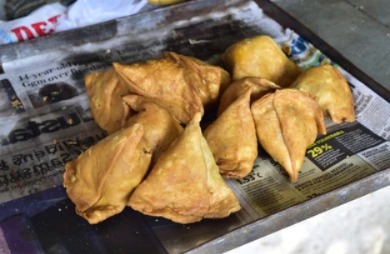
New Delhi: The next time a vendor serves you a hot samosa, pakora or vada pav wrapped in yesterday's newspaper, remember: the biggest health risk may not be the fried food itself, but the paper around it.
For decades, newspapers have been an inseparable part of India's street food culture. They have doubled up as plates, wrappers and absorbent sheets for excess oil, offering a cheap and convenient solution for vendors. But India's food safety regulator has once again sounded the alarm, warning that this seemingly harmless practice could expose consumers to toxic chemicals, heavy metals and harmful contaminants.
The Food Safety and Standards Authority of India (FSSAI) has reissued a strong advisory directing food business operators—including street vendors, restaurants, sweet shops and eateries—to stop using newspapers and other printed materials for wrapping, serving or storing food. The regulator has emphasised that newspapers are not food-grade materials and pose serious health risks, particularly when they come into contact with hot, oily or moist food.
The renewed warning follows a recent incident in Mumbai where authorities reportedly found a vada pav vendor using newspapers to package food. The discovery prompted inspections and brought renewed attention to a practice that, despite being prohibited under food safety regulations, continues to be widely followed across the country.
According to FSSAI, the biggest concern lies in the printing ink used on newspapers. Modern printing inks contain a range of chemical compounds, pigments, preservatives and additives. When hot food is placed directly on newspaper, these substances can migrate into the food. Oily foods such as samosas, kachoris, pakoras and vada pav are particularly vulnerable because fats can absorb chemicals more easily.
Health experts warn that prolonged exposure to some of these substances may increase the risk of toxicity and other health complications. Certain printing inks may contain heavy metals such as lead and other chemical residues that are not intended for human consumption. While a single newspaper-wrapped snack may not cause immediate harm, repeated exposure over time can contribute to a greater health burden.
The risks, however, extend beyond ink contamination. Newspapers pass through multiple stages before reaching consumers—printing presses, warehouses, transport vehicles, vendors and households. Along the way, they are exposed to dust, dirt, moisture, bacteria and other environmental contaminants. Food wrapped in such materials can easily pick up these contaminants, increasing the risk of food-borne illnesses.
What makes the issue more significant is that the practice has already been prohibited for several years. Under the Food Safety and Standards (Packaging) Regulations, 2018, newspapers and recycled printed papers cannot be used for wrapping, storing, carrying or serving food. The rules also prohibit the use of newspaper sheets for soaking excess oil from fried foods. Despite these regulations, newspaper packaging remains commonplace because of its low cost and easy availability.
Food safety authorities say there are several safer alternatives available today, including food-grade paper, butter paper, paper boxes, biodegradable containers and other approved packaging materials. These options are specifically designed for contact with food and significantly reduce the risk of chemical migration and contamination.
The latest advisory is also aimed at increasing public awareness. Regulators believe consumers have an important role to play by refusing food wrapped in newspapers and encouraging vendors to adopt safer packaging practices.
For many Indians, the image of a steaming samosa wrapped in newspaper evokes nostalgia and memories of local markets and roadside stalls. But food safety experts say traditions must evolve when scientific evidence points to health risks. The message from FSSAI is clear: newspapers are meant for reading, not for serving food. The cost of convenience, they warn, may be far higher than most consumers realise.
BI Bureau
_270_x_189.webp)